
On this page
- The short answer
- Should a plumbing business use an AI chatbot at all?
- One plumbing enquiry contains four different signals
- The first reply should stabilise the conversation, not diagnose the fault
- A practical plumbing intake brief
- Safety messages should be fixed, reviewed and local
- Five lanes for a plumbing front desk
- Plumbing price questions need one approved answer mode
- Grounding reduces risk; it does not create a warranty
- What happens after the customer sends a message
- Booking an appointment is not dispatching a plumber
- What capacity actually does
- Website chat, WhatsApp or telephone?
- Which type of product does the business actually need?
- Which Inboxxit plan fits a plumbing business?
- A nine-step launch test for plumbing teams
- Who this suits, and who should choose something else
- The decision: cover the front door, do not impersonate the trade
- How we checked
At 10.38pm a homeowner notices water spreading from beneath the kitchen cabinet. They do not want a lesson on artificial intelligence. They want to know whether you cover their area, whether anyone will respond tonight, and what they should do in the meantime.
You may be under another sink. You may be driving home. You may finally be eating the dinner that went cold two hours ago.
That is where an AI chatbot can earn its place in a plumbing business: respond immediately, answer approved business questions, collect a useful job brief and move the customer to a safe next step. It should not diagnose a concealed fault, write improvised repair instructions, decide that a wet property is safe, turn a call-out fee into a final job price, or promise a plumber the business has not dispatched.
The short answer
Inboxxit is worth considering when a plumber or small team needs website enquiries answered, captured and owned while the crew is working. The $39 entry plan covers the website, lead capture, buying-intent scoring and the CRM. Growth adds in-chat booking, voice notes, follow-up and conversion reporting, and is where WhatsApp sits. Inboxxit is not a telephone receptionist, estimator, hazard assessor, route optimiser or field-service platform.
Inboxxit is our product, so this is a product-fit guide rather than a neutral roundup. Where another kind of product is the better answer, we say so — and for a plumbing business there are several places where it is.
Should a plumbing business use an AI chatbot at all?
Yes, when the problem starts with unanswered website or WhatsApp enquiries and continues with weak lead ownership. The fit is strongest when the company gets real enquiries from its website, Google profile, advertising or referrals; has a solo plumber or small crew who cannot watch messages all day; serves defined parishes, communities or travel zones; can document its services, hours, coverage, call-out policy and quote boundaries; wants conversations to become visible records instead of loose messages; has a clear human handoff for urgent or disputed situations; and can offer a routine assessment, estimate or callback through a straightforward calendar.
It is a weaker first purchase when most new work arrives by telephone, routes change every hour, each job depends on a particular technician's skills or the parts on their van, or the real requirement is estimating, invoicing and dispatch in one system.
That distinction sounds obvious until you start searching. "AI receptionist for plumbers" is used for a website widget, a WhatsApp assistant, a voice agent that answers the phone and a feature inside a field-service platform. They are not interchangeable, and the wrong one will disappoint you in a specific, expensive way.
One plumbing enquiry contains four different signals
It is tempting to treat "urgent lead" as one thing. Plumbing operations are not that tidy. A single message usually carries four signals, and they are decided by different parts of the business.
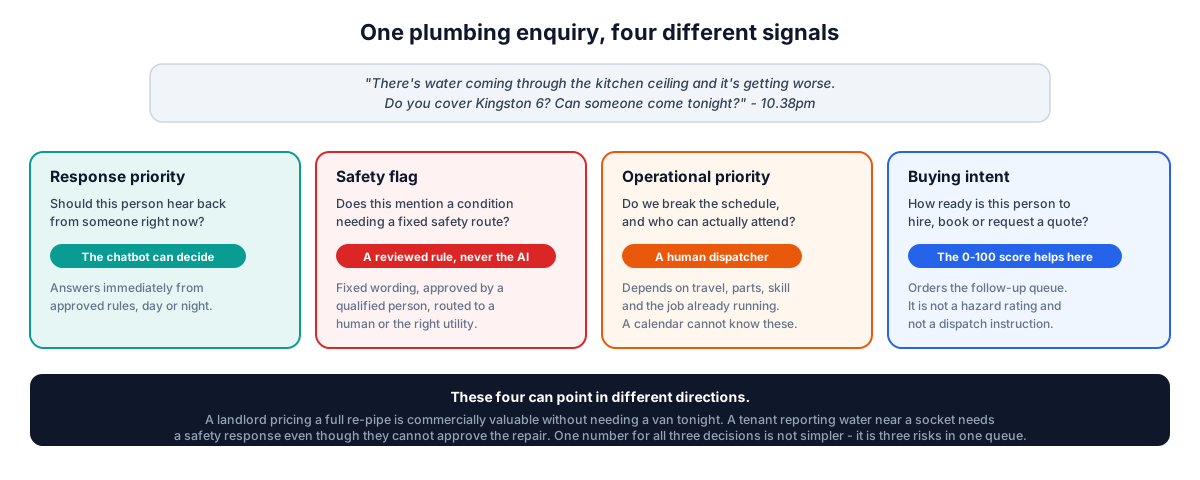
A landlord requesting quotes for a full re-pipe may be a commercially valuable lead who does not need a van tonight. A tenant reporting water near an electrical outlet may need a safety response even though they cannot authorise the repair. A loyal customer with an active leak may deserve immediate operational attention even if the message does not read as a high-value purchase.
Inboxxit's 0 to 100 score measures buying intent. It is not a plumbing hazard score and it is not a dispatch instruction. If a business drives all three decisions from one number, it has not simplified the workflow — it has mixed three different risks into one queue.
The first reply should stabilise the conversation, not diagnose the fault
Speed matters, but the content matters more than the stopwatch. "We have your message and need a few details" is useful. "That sounds like a failed compression fitting and we can fix it for $X tonight" is a diagnosis, a quote and an arrival promise built on one sentence from a stressed customer.
A good first response does three jobs: it acknowledges the enquiry, checks for a condition that must leave the normal sales flow, and collects what the team needs for its next decision.
A practical plumbing intake brief
The exact questions depend on the work, but a useful approved brief usually covers the customer's name and callback number; the property address, community and a landmark where local addressing needs one; whether you serve that area; whether water is actively escaping, intermittent or stopped; the fixture or room involved; when it began and whether it is worsening; whether the customer can safely reach a known shut-off without entering water or touching electrical equipment; whether they are the owner, tenant or property manager; any building-management or access requirement; and the best time and channel for a human reply.
This is intake, not diagnosis. "Water is coming through the ceiling" is useful for the dispatcher. It does not establish which pipe failed, what has to be opened up, how long the work will take or what the repair will cost.
Safety messages should be fixed, reviewed and local
This is the part of a plumbing chatbot most likely to cause real harm, and it is the part most vendors gloss over.
Use a short, fixed message for approved triggers — water reaching electrical equipment, suspected contaminated water, structural damage, or anything else the business has classified as unsafe. Route the conversation to the correct local emergency, utility or human process. Do not ask an AI to work out the safest action from general knowledge in the moment.
Base that fixed wording on guidance that applies where you actually operate. In Jamaica, the Jamaica Information Service flood safety tips advise turning off electrical appliances, gas and heating if there is time; staying away from power lines and broken transmission cables; and keeping clear of flood water, which may carry chemicals or other hazardous materials. Afterwards, they advise keeping power and appliances off "until the house is cleaned up properly and an electrical personnel has confirmed that it is OK to put them on".
The division of responsibility also matters to a plumber, and it is spelled out locally. JIS guidance is to report broken sewer or water mains "directly to the parish council, the public works department or water resources authority for your area", and to boil drinking water until a safe supply is confirmed. That tells a customer when the problem is theirs and when it belongs to the National Water Commission or the parish council — a question your front desk will be asked constantly, and one it can answer without guessing. The Office of Disaster Preparedness and Emergency Management is the national agency behind that advice.
On the electrical side, Jamaica Public Service recommends having premises wiring and grounding checked by a certified electrician every one to five years, and re-certified by the Government Electrical Regulator after significant changes. If a job turns out to be an electrical question rather than a plumbing one, that is the referral route — not a paragraph improvised by a chat assistant.
These sources help a plumbing company and a qualified reviewer design the response. They do not give a sales chatbot permission to improvise household emergency instructions. And an overseas emergency number, shut-off assumption or utility instruction should never be copied into a Jamaican deployment because it appeared in a foreign article. Different country, different utility, different phone number, different answer.
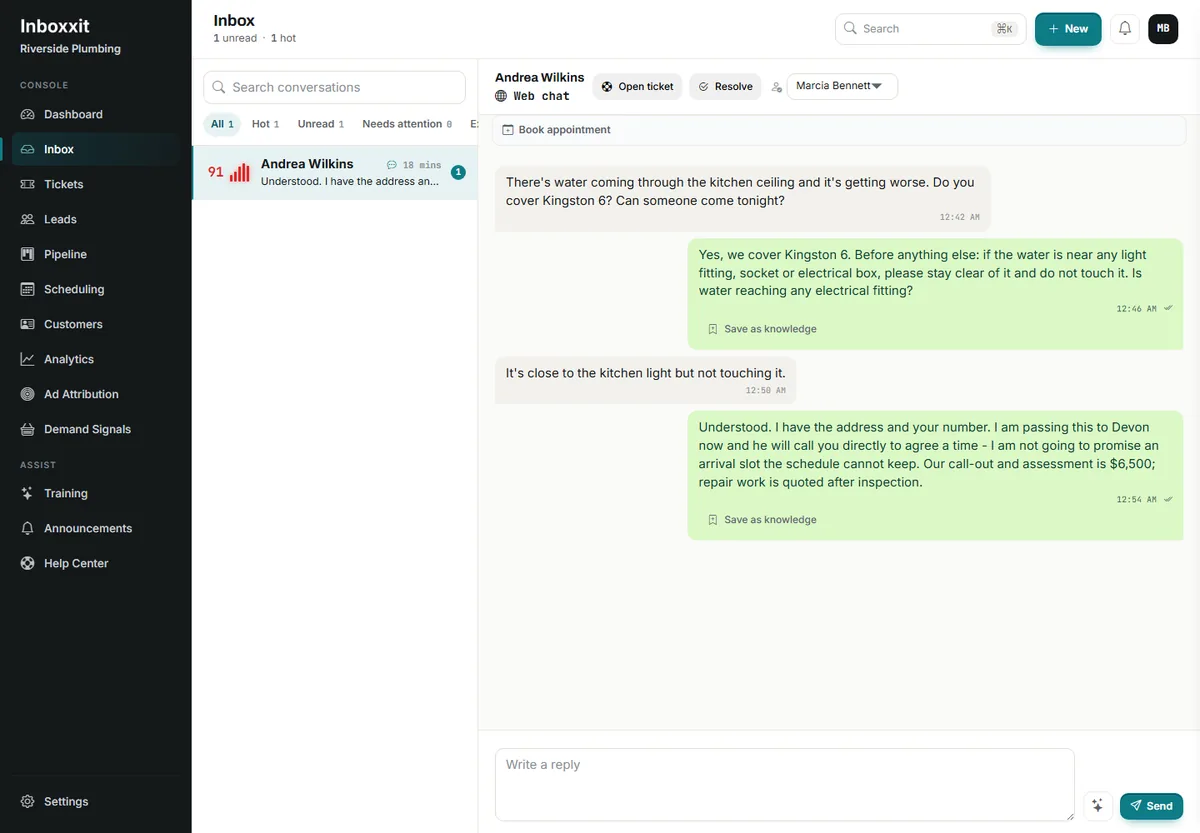
Five lanes for a plumbing front desk
Before loading the chatbot with every FAQ on the website, decide which lane each enquiry belongs in. This map tells you what to configure, what to test and where the human team stays responsible.
| Enquiry lane | The chatbot may | It should not |
|---|---|---|
| Routine business question | State approved services, areas, hours, languages, contact routes and defined policies | Promise coverage or availability that is not in current business data |
| New job brief | Capture contact, location, the symptoms the customer describes, timing, access context and desired next step | Diagnose the failed component or prescribe a repair |
| Price question | Give the approved fee, starting figure, range or assessment boundary assigned to that service | Improvise a total, or present a call-out fee as the final cost |
| Routine booking | Offer a real assessment, estimate, maintenance or callback slot on Growth, and confirm the customer's choice | Promise a plumber, route, arrival window, duration or parts the calendar knows nothing about |
| Safety, complaint or complex case | Use the approved message, capture only essential details, and hand off | Assess electrical, sewage, structural or health risk; argue liability; or write DIY instructions |
It also gives the chatbot permission to stop. A responsible front desk does not have to finish every conversation by itself.
Plumbing price questions need one approved answer mode
Customers will ask "how much?". That is reasonable. The answer depends on what the business can honestly know before attending, so assign every service one of four modes.
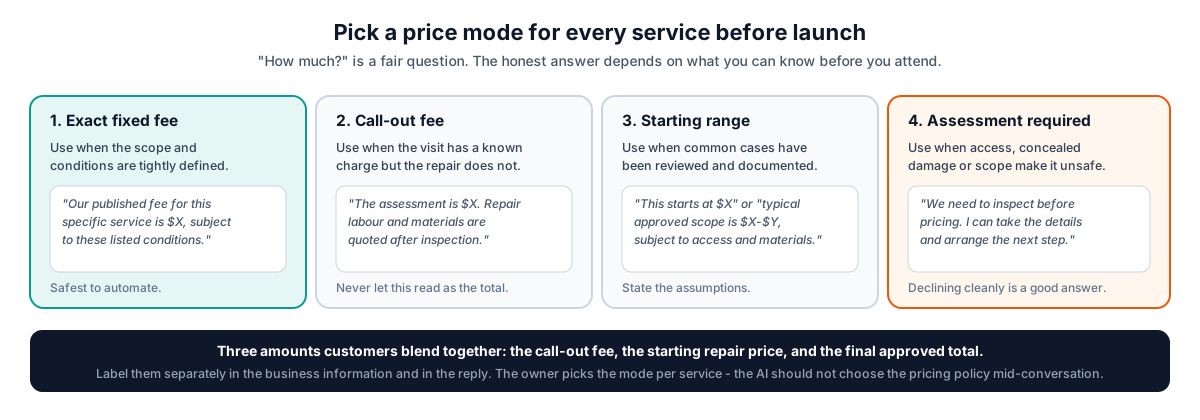
In Inboxxit this is not just a discipline, it is a switch. The chatbot settings carry a "Confidence Matrix" of categories the assistant may answer without human review — business hours and location, service-area checks, initial pricing estimates and appointment scheduling. All four are off by default, so a business opts in deliberately rather than discovering later that the AI has been quoting.
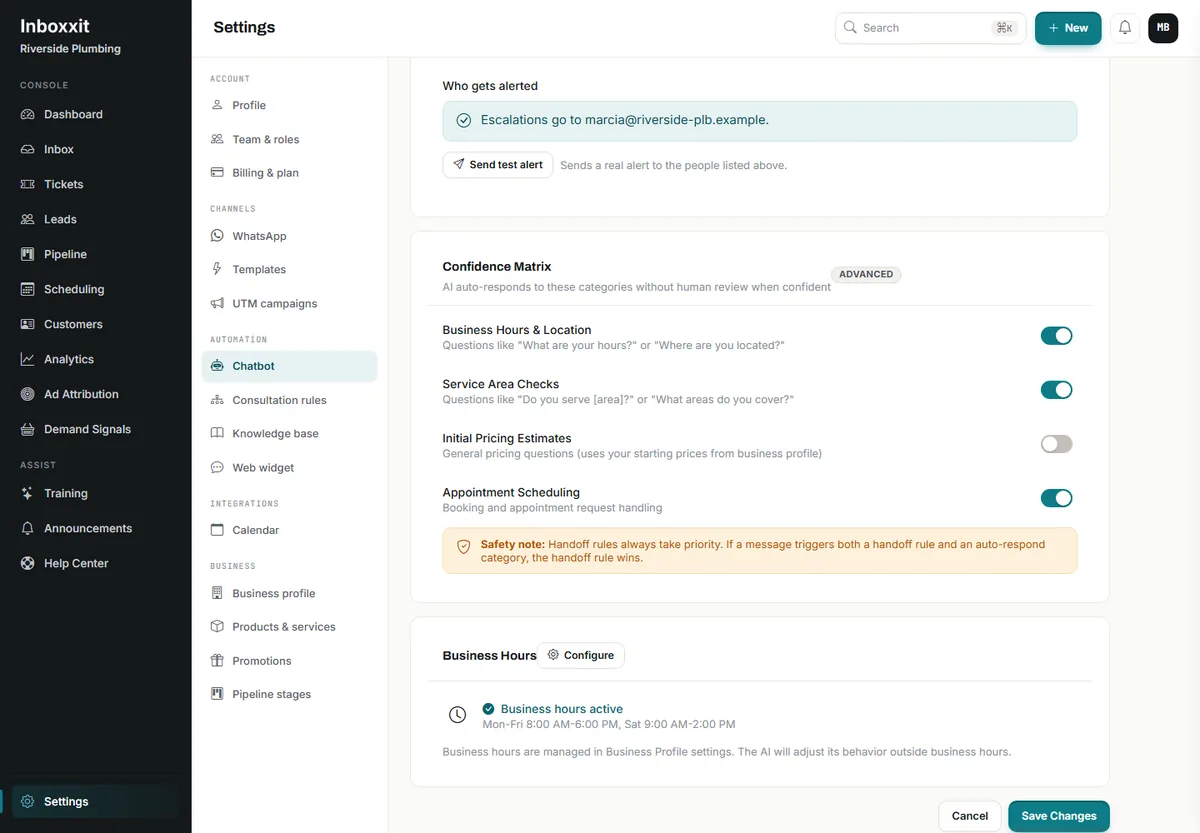
That last line matters more than it looks. It means a safety handoff cannot be overridden by an eager auto-respond setting, which is exactly the guarantee you want before letting anything answer a plumbing emergency at midnight.
Grounding reduces risk; it does not create a warranty
Inboxxit answers from the business's approved prices, hours and services, and hands off when it is unsure. That is the right design goal. Inboxxit's own terms of service also state that AI outputs are provided without warranty and are not a substitute for human judgment.
So the honest promise is not "it can never quote the wrong figure". The honest promise is that the business controls the approved information, sets the handoff rules and can test the situations where the assistant must abstain. Less dramatic, and considerably more useful to an operator who will have to stand behind whatever the chat said.
What happens after the customer sends a message
The answer is only the front edge of the job.
- Answer. On the website plan, Inboxxit responds around the clock using approved services, hours, service areas, contact details and controlled price language.
- Identify. The conversation establishes who the customer is, what they are asking about, and whether this belongs in the normal enquiry flow or needs a person.
- Own. The chat becomes a lead record in the shared inbox and pipeline, with history, service interest and the 0 to 100 score — instead of a message buried in someone's personal WhatsApp.
- Book. On Growth and above, the assistant checks real availability, offers times and creates the appointment only after the customer confirms.
- Follow up and measure. Growth adds follow-up and conversion reporting, so a stalled enquiry gets chased and eligible bookings and won work can be tied back to advertising.
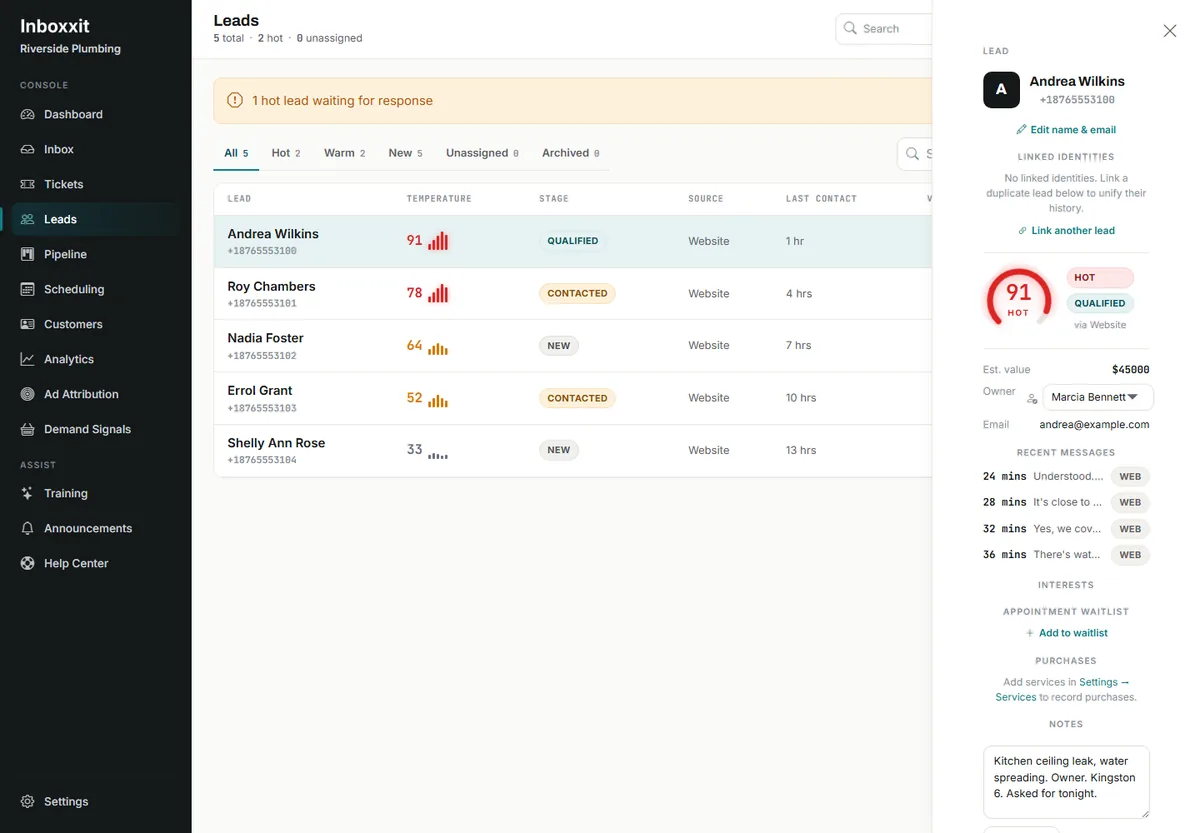
Ownership still needs a rule the software cannot supply. Decide who checks new enquiries after hours, who receives handoffs, and what happens when that person is already under a sink.
Booking an appointment is not dispatching a plumber
This is the most important operational boundary in this article.
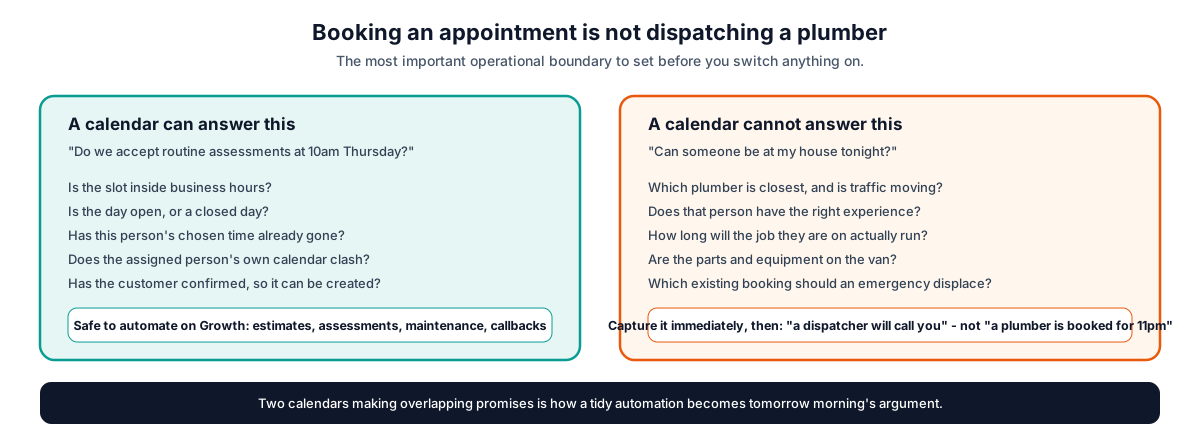
For most small plumbing businesses the safest starting appointment is a routine estimate, a planned assessment, preventive maintenance, a non-urgent installation consultation, or a scheduled callback where a human confirms the operational details.
What capacity actually does
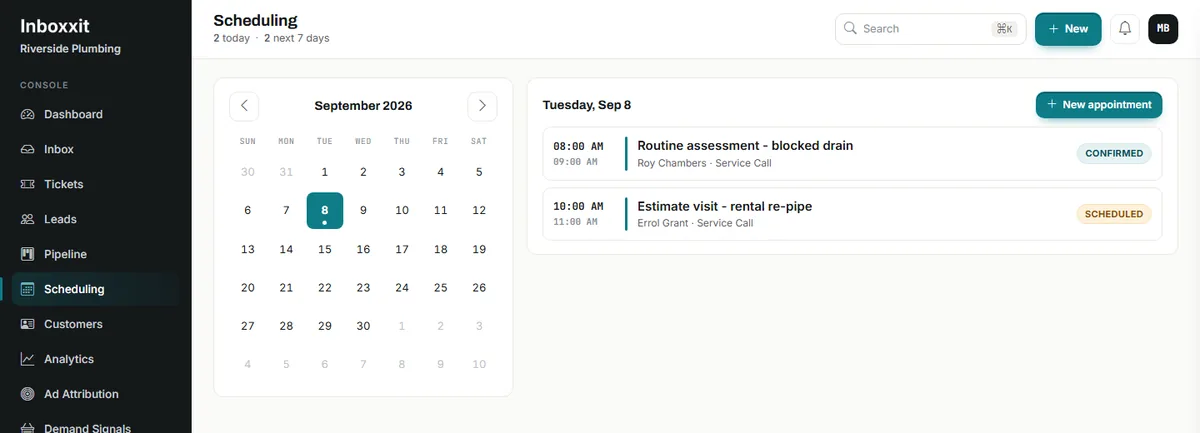
Inboxxit's capacity setting is the number of appointments each person takes at once, from 1 to 20. You tick the people who share the work, jobs are spread between them, and each person's own connected calendar is checked before their name goes on a visit. A solo plumber should set one. A team should set the number based on real capacity for that appointment type, not headcount.
What it does not do is manage vehicles, routes, parts or equipment as bookable resources, or decide which plumber has the right experience for a job. If your company already has an authoritative dispatch calendar, decide explicitly how a confirmed Inboxxit appointment reaches it. Two calendars making overlapping promises is how a tidy automation becomes tomorrow morning's argument.
Website chat, WhatsApp or telephone?
Choose the channel before choosing the product.
Website enquiries. The Website Chatbot plan is the cleanest fit when people land on a service page from search, ads or a Google Business Profile and leave because nobody answers the question in front of them. It answers approved questions, captures the lead, scores intent and puts the opportunity in the CRM. It does not include in-chat booking, WhatsApp, voice notes, document upload, automated follow-up or conversion reporting.
WhatsApp enquiries. WhatsApp is built into Growth and above, using the business's own WhatsApp Business number through Meta's official route, with setup and approval required. For a Caribbean plumbing business that is often the realistic front door: the customer messages the number already printed on the van, the invoice or the business card. It is also the only channel where a customer can send you a photograph of the leak — the website widget accepts text and voice notes, not images. If seeing the job before you quote matters, that is a Growth-plan reason on its own.
Voice notes deserve a mention for the same reason. A customer standing in a wet kitchen would usually rather talk than type. Growth includes 300 voice notes a month and Professional 1,000; the entry plan includes none.
One caveat, stated plainly: WhatsApp is not currently on public sale while Meta business verification completes, so confirm timing with us before buying for WhatsApp. And WhatsApp is never unrestricted outbound messaging — once the 24-hour customer-service window closes, an approved template is generally required to reopen the conversation.
Telephone calls. Inboxxit does not answer phone calls. If missed calls are your main leak, compare a phone-first AI receptionist or a human answering service instead. Be aware that most established products in that category, and most field-service platforms, are built for North American markets — check availability, payment methods, number support and support hours for your territory before committing, rather than assuming a well-reviewed tool will serve a Kingston or Bridgetown business.
Which type of product does the business actually need?
| Product type | Best when | The buying question |
|---|---|---|
| Contact form | You need basic details and reliably respond soon after submission | It answers nothing, calms nobody and creates no handoff |
| Human answering or live-chat service | Most enquiries need nuance and judgment | Check hours, plumbing knowledge, scripts, cost, and how records reach your system |
| Telephone AI receptionist | Missed calls and texts are the main lost opportunity | Confirm call transfer, recording, disclosure, booking rules — and whether it serves your country |
| Inboxxit website or WhatsApp front desk | Website or WhatsApp leads need answers, capture, scoring, ownership and a defined next step | Not telephone answering, diagnosis, estimating, dispatch or field-service management |
| Plumbing field-service platform | You need dispatch, routes, estimates, work orders, invoicing and payments in one record | More implementation and cost; check regional availability, and whether you still need a front layer for web enquiries |
Buying a full field-service platform to solve a handful of unanswered website chats is too much. Buying a website chatbot to run twelve plumbers across three parishes is not enough.
Which Inboxxit plan fits a plumbing business?
Prices are in US dollars and were verified against the configuration running the live product on 8 September 2026. Confirm the current offer on the pricing page before buying.
| Plan | Best plumbing use | Monthly package |
|---|---|---|
| Website Chatbot | Website FAQs, coverage checks, lead capture, intent scoring, shared inbox and pipeline | Founder $39, normally $59; website only; 500 conversations; 1,000 AI replies; 3 team members |
| Growth | In-chat booking, calendar connection, photos and voice notes over WhatsApp, document training, follow-up and conversion reporting | $79, normally $99; 3,000 conversations; 4,000 AI replies; 5 team members |
| Professional | Higher volume, plus API access and advanced analytics | $149, normally $199; 10,000 conversations; 10,000 AI replies; 15 team members |
Start on the entry plan to test one question: can the website answer routine plumbing enquiries, capture a useful brief and give the team one visible follow-up queue? Move to Growth when a defined appointment should be booked inside the conversation, or when photos, voice notes or follow-up complete a step the team has actually agreed to use. Do not upgrade because "more automation" sounds better.
There is no free trial. Payment is collected at signup and a new customer can request a full refund within 30 days of the first payment under the money-back guarantee. The $39 founder rate on the entry plan is scheduled to close on 31 October 2026 and is held for the life of the subscription while it stays active.
A nine-step launch test for plumbing teams
- Give it one first job. Start with new website enquiries. Do not launch emergency intake, routine bookings, warranty disputes, landlord approvals and quote follow-up in the same afternoon.
- Separate the four signals. Write different rules for acknowledgement, safety flags, operational priority and buying intent. Make sure the score never becomes an automatic hazard or dispatch decision.
- Build the approved-answer map. Current services, service areas, hours, languages, contact routes, call-out policy, price modes, booking types and response expectations. Remove expired offers and old coverage.
- Build the never-answer map. Block fault diagnosis, DIY repair steps, electrical or contaminated-water assessment, liability arguments, final totals outside policy, parts promises and unverified arrival times.
- Choose a price mode for each service. If the team cannot agree the policy, the chatbot should not answer that price question yet.
- Book only what the calendar can represent. Routine assessment, estimate, maintenance or callback. Set realistic capacity and buffer time, and define how a confirmed appointment reaches the authoritative schedule.
- Define a human owner. Who receives after-hours handoffs, who reviews safety triggers, who calls urgent requests, and what happens when that person is unavailable. "The bot handed it off" is not an operating procedure.
- Test the awkward messages. Water near an outlet, a ceiling bulge, a sewage backup, an out-of-area address, a tenant without landlord approval, an old call-out fee, a same-hour arrival request, a complex re-pipe, an unavailable service, and a final price before inspection. The best tests are the ones it should decline cleanly.
- Review real conversations with a minimum-data rule. Collect what the team needs for the next decision, not everything the customer will type. Keep card details, alarm codes and key locations out of ordinary chat.
Steps three and seven are settings, not good intentions. The business profile holds the service areas, licence number, hours and after-hours message the assistant answers from.
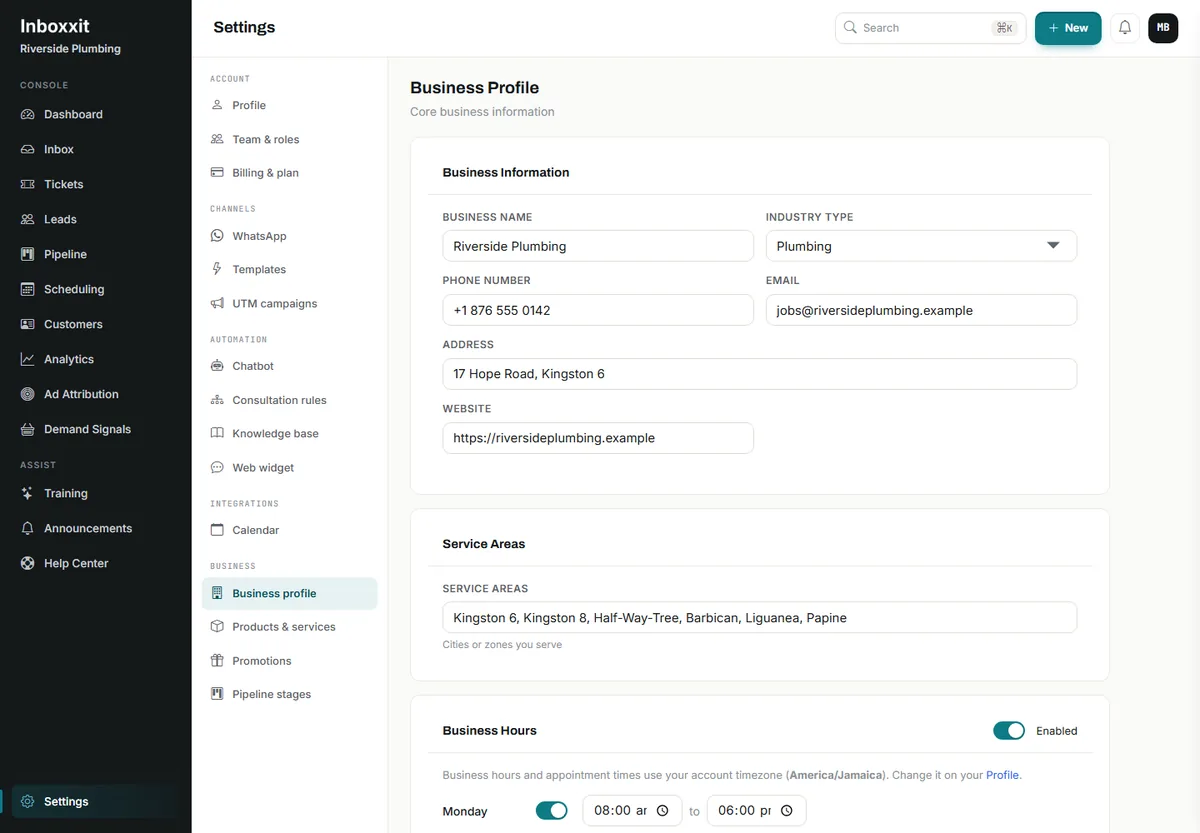
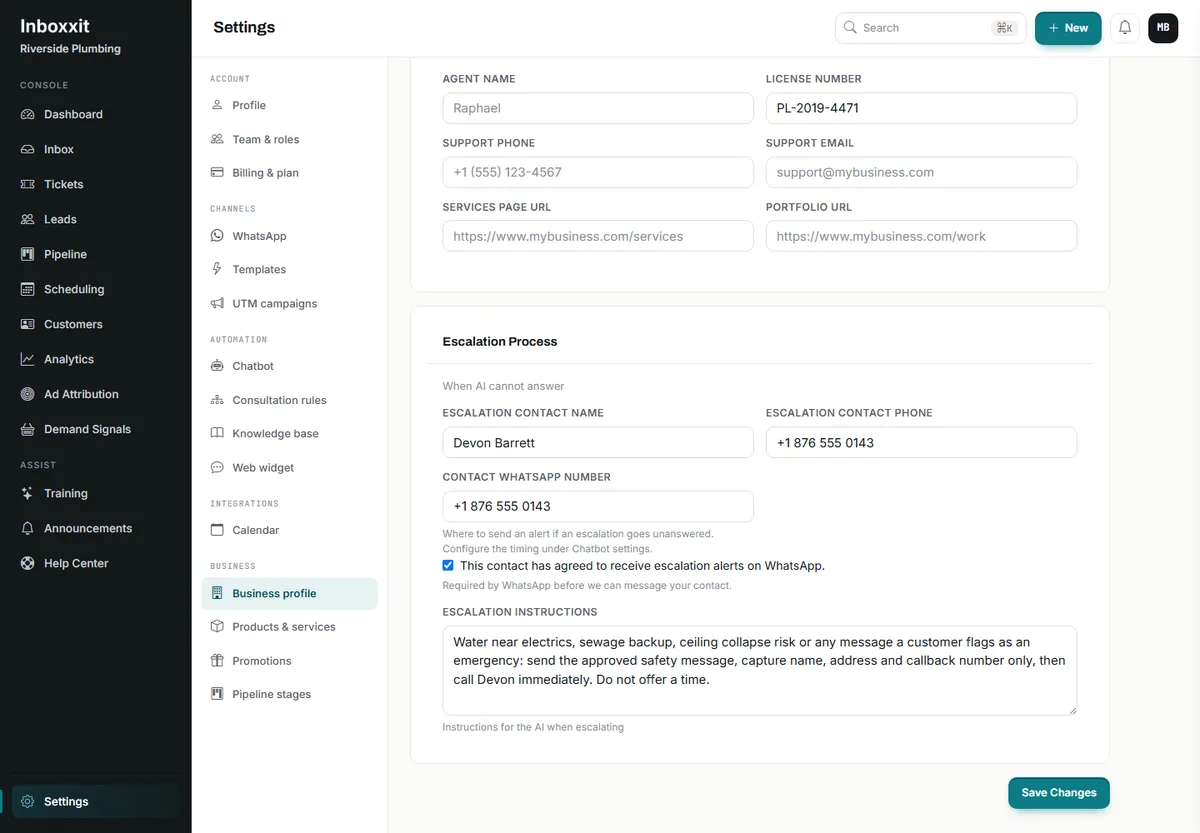
On that last point, the escalation contact has to tick a box confirming they have agreed to receive alerts on WhatsApp before the system will message them. Consent is not assumed, even for your own colleague. Your privacy obligations to customers work the same way: collect the minimum, tell people what you are doing with it, and remember that in Jamaica the Data Protection Act 2020 has been fully enforceable since December 2023, with the Office of the Information Commissioner as regulator. Home addresses and access details are exactly the kind of data that deserves a retention rule.
Who this suits, and who should choose something else
Inboxxit is a reasonable fit when the website produces enquiries answered too slowly; the owner or crew is doing the work rather than sitting at a desk; approved service, coverage and price information can be documented; the team wants leads, conversations and stages in one shared CRM; routine bookings can use a simple calendar on Growth; and a real person will own safety, diagnosis, pricing exceptions and dispatch.
Choose a phone-first product when most valuable opportunities arrive as calls, callers expect a live transfer, or call recording and overflow are the main requirement. Choose or keep a field-service platform when several technicians need dispatch and route decisions, or when estimates, parts, work orders, invoicing and payments must share one record. Inboxxit can sit in front of that platform if the handoff is clear — it should not become a second source of truth by accident.
The decision: cover the front door, do not impersonate the trade
A plumbing business does not need an AI that sounds confident about every pipe, fitting and emergency. It needs a front desk that responds while the human team is working, collects the right details, stays inside approved boundaries and makes the next action visible.
Start with the Website Chatbot plan if the immediate problem is unanswered website enquiries and scattered follow-up. Choose Growth when an appointment should be booked inside the conversation, or when photos, voice notes and follow-up matter. Choose a phone receptionist when calls are the gap, and field-service software when the real problem is dispatch, routing and job completion. The technology should make the business easier to reach. It should not make promises the plumber has to explain away later.
Before you buy, talk to us with five real scenarios: an ordinary service question, an out-of-area lead, a price request, a routine booking and a safety-triggering message. The awkward examples will tell you more than any polished demonstration. The wider category is covered in our guide to WordPress AI chatbots for service businesses, and if you are switching from an existing chat tool, the Tidio comparison works through the migration.
How we checked
Inboxxit's plan prices, allowances, feature gates, the Confidence Matrix defaults, booking capacity behaviour, escalation fields, voice-note limits and the founder deadline were verified on 8 September 2026 against the configuration that runs the live product. We also checked what the website widget accepts: text and voice notes, not photographs. Every product screenshot was captured from the running product in September 2026, and the three diagrams are ours. Safety guidance is cited from Jamaican sources because that is the market this article is written for; a business operating elsewhere should have a qualified local reviewer approve its own triggers, wording and referral routes.
- JIS flood safety tips and JIS hurricane tips, for electrical precautions, water-main reporting and drinking water
- Office of Disaster Preparedness and Emergency Management and the National Water Commission
- JPS electrical safety guidance, for wiring inspection and the Government Electrical Regulator
- Meta WhatsApp Cloud API messaging guidance, for the 24-hour customer-service window
- Inboxxit pricing, the Website Chatbot plan, the booking assistant, terms and privacy policy
Four signals in one plumbing enquiry
A single plumbing message carries four separate signals, and a different part of the business decides each one.
-
Response priority
Should this person hear back now? The chatbot can decide this.
-
Safety flag
Does the message need a fixed safety route? A reviewed rule decides, never the AI.
-
Operational priority
Should the schedule break, and who can attend? A human dispatcher decides.
-
Buying intent
How ready is this person to hire? The 0-100 score helps order follow-up.
Frequently Asked Questions
Is an AI chatbot useful for a plumbing business?
Yes, when the business gets website or WhatsApp enquiries that are answered slowly or followed up inconsistently. A useful chatbot answers approved business questions, captures a job brief, records the lead and moves the customer to a human callback or a valid appointment. It is less useful when nearly all work arrives by telephone, or when the real need is technician dispatch and field operations.
Can Inboxxit diagnose a leak or tell a customer how to fix it?
No, and it should not be configured to try. Use it for approved business information, structured intake, fixed safety messages and human handoff. Qualified people should make technical, safety and repair decisions. Inboxxit's terms also state that AI outputs carry no warranty and are not a substitute for human judgment.
Will the chatbot invent call-out fees or job prices?
It answers from the business's approved information and hands off when uncertain, which reduces pricing risk. It also ships with pricing answers switched off: the Confidence Matrix in chatbot settings lists initial pricing estimates as an opt-in category, so nothing is quoted until the owner enables it. Assign every service a price mode, test the edge cases, and keep final or unusual quotes with a person.
Can Inboxxit book an emergency plumber?
On Growth and above it can offer and confirm real calendar slots, and it checks the assigned person's own calendar first. That is not route-aware dispatch: it does not know which plumber is closest, what is on the van or how long the current job will run. Routine estimates, assessments, maintenance and callbacks are the cleanest starting points. Promise an emergency arrival only if your operating process can genuinely support it.
Can a customer send a photo of the leak?
Over WhatsApp, yes, on Growth and above. The website widget accepts text and voice notes but not images, so if seeing the job before quoting matters to you, that is a WhatsApp workflow rather than a website one. Voice notes are included on both channels from Growth: 300 a month on Growth and 1,000 on Professional.
Does Inboxxit answer telephone calls?
No. Inboxxit covers website chat and, on Growth and above, WhatsApp. A plumbing company that mainly loses telephone calls should compare a phone-first AI receptionist or a human answering service, and should check that the product actually serves its country before committing.
Does this replace plumbing dispatch or job-management software?
No. It handles front-door enquiries and, on Growth, simple calendar booking. It does not do route optimisation, vehicle tracking, parts management, field estimates or invoicing. A larger team may keep a field-service platform as the operational system and define how Inboxxit passes qualified enquiries into it.


